
Mud tubes or packing
Thin tunnels of soil and mud running through brickwork, wall cavities or along timbers. Subterranean termites build these sheltered paths to travel between their nest and their food source.
Termite inspections
A termite inspection looks beyond what is visible on the surface. We check the areas where termites travel and feed, then explain what we have found and what it means for your property.
Why it matters
Sydney’s warm, humid climate and long building season give termites a comfortable environment, particularly in older timber homes, weatherboard cottages and properties with established gardens. Subterranean termites work quietly from the ground upwards, so a property can carry activity for a long time before anything is obvious.
Regular inspections are the practical way to find activity early, when the problem is usually smaller, easier to manage and far less disruptive to your home or business.
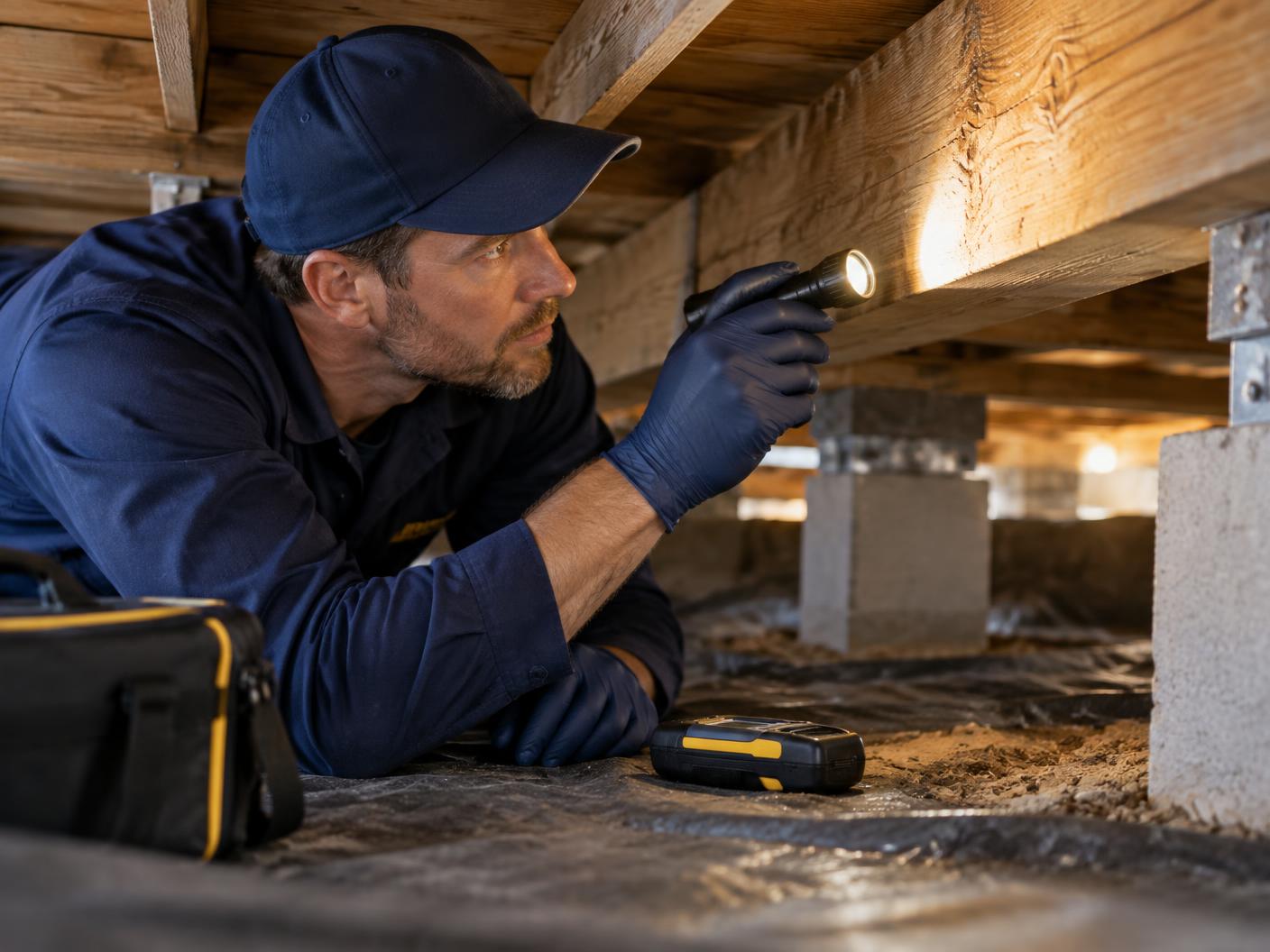
What we check
Every property is different, so the inspection follows the construction and access of yours. In general we work through the areas below.
If an area cannot be safely accessed on the day, we tell you which parts could not be inspected rather than assuming they are clear.
What to look for
Thin tunnels of soil and mud running through brickwork, wall cavities or along timbers. Subterranean termites build these sheltered paths to travel between their nest and their food source.
Timber that sounds dull or hollow when tapped, or that crushes easily, may have been eaten from the inside while the outside still looks intact.
Paint that bubbles, lifts or appears darker in patches can hide termite activity in the timber beneath it.
Small piles of dry, wood-coloured pellets beneath timber are left behind by drywood termites as they push waste out of their galleries.
In the warmer months winged termites emerge in numbers, often near lights, windows or doorways, and leave behind pairs of equal-sized wings.
Doors and windows that suddenly fit tightly, or floors and shelves that sit unevenly, can point to moisture and termite damage in the frame.
Termite types
Knowing which termite you are dealing with changes the approach, because each group behaves and travels differently.
The most common and most damaging group in Sydney. Colonies live in the ground and reach buildings through hairline cracks, wall cavities and expansion joints, usually travelling from a moist, sheltered source. Genera such as Coptotermes are responsible for much of the structural termite damage found in Australian homes.
These live entirely inside dry, sound timber and do not need contact with soil. They are less common around Sydney than subterranean species, but can arrive in furniture, timber or decorative woodwork, and are usually noticed by the frass they push out.
Dampwood termites attack timber that has become wet or decayed, so they are most often linked with persistent moisture such as a leaking roof, plumbing fault or poor subfloor ventilation. Correcting the moisture source is part of any solution.
Sydney also carries a mix of native and introduced species, and several live in the garden without threatening the structure. An inspection separates the timber that matters from the activity you can leave alone.
How it works
Share the suburb, property type and what you have noticed, so we can prepare for the inspection.
We check the internal and external areas, plus subfloor and roof void spaces where accessible.
You are told what was found, what it means for the property and what needs follow-up.
If treatment or ongoing management suits your property, the options and pricing are confirmed before any work is booked.
Book an inspection
Tell us the suburb and property type and we will discuss the inspection with you.